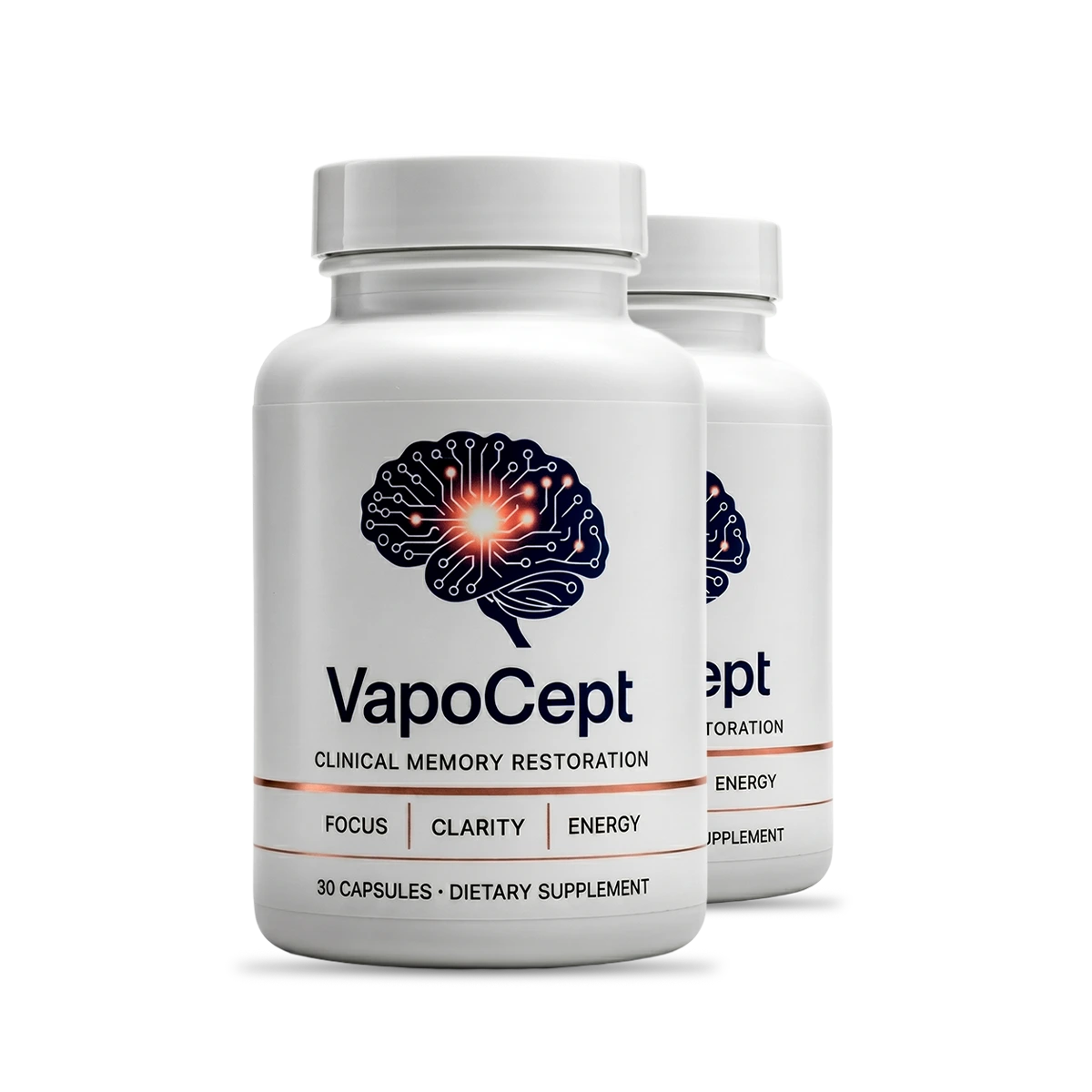
Six active ingredients, and nothing hidden behind a blend name
The useful thing about this label is what it does not say. There is no
“proprietary cognitive matrix” with a single combined milligram figure
covering eight ingredients at unknown ratios. Each one is listed on its own with its
own amount. That is the whole reason a label is worth reading.
Supplement Facts
| Serving size | 1 capsule |
|---|
| Servings per container | 30 |
|---|
| D-Glucosamine Sulfate Potassium Chloride | amino sugar |
|---|
| Ginkgo Biloba Extract | leaf |
|---|
| Turmeric Extract | rhizome |
|---|
| Marigold Extract | flower |
|---|
| Green Tea Extract | leaf |
|---|
| Bamboo Extract | stem |
|---|
Ginkgo Biloba Extract — leaf
The most researched thing in the bottle, and the only one with a controlled memory
result attached. Kaschel, 2011: 188 healthy adults aged 45 to 56, standardised extract,
six weeks, better recall of appointments. The same study found no improvement on
recognition memory. Two much larger trials — DeKosky's GEM study in 2008 and
Snitz in 2009 — found it does not reduce dementia rates.
It is also the ingredient with the interaction that matters. See
side effects and safety before you start if
you take anything that affects clotting.
Turmeric Extract — rhizome
Here for the curcumin inside it. Plain curcumin absorbs badly, which is why the
trial worth citing used an absorbable form: Small, 2018, forty adults aged 51 to 84,
eighteen months, ahead of placebo on memory and attention scores. Forty people makes
that a pilot study. It is encouraging. It is not settled.
Marigold Extract — flower
Where nearly all commercial lutein comes from. Lutein and zeaxanthin gather slowly
in the retina and in nerve tissue. Hammond's 2017 trial gave 12 mg a day and found
an attention benefit in older adults — after twelve months, with 51 participants
analysable at the end.
Green Tea Extract — leaf
Three things arrive together here: EGCG, which works against oxidative stress;
L-theanine; and a small amount of natural caffeine. The theanine and caffeine pairing
is the only part of this capsule with same-day evidence (Haskell, 2008), and what it
affects is attention rather than recall. The caffeine is well under a cup of coffee,
but it is not zero, which is worth knowing if you sleep lightly.
Bamboo Extract — stem
No plant holds more silica. Silica has a documented role in connective tissue
— Jugdaohsingh's 2007 work is the usual reference, and it is about bone. It has
no documented role in cognition whatsoever. It is here as a mineral contribution and
we are saying so rather than implying otherwise.
D-Glucosamine Sulfate Potassium Chloride — an amino sugar, not a plant
Most people know this one from joint-health shelves. No study has ever run it
against a memory measurement. The largest dataset attached to it, Ma's 2019 BMJ
analysis, concerned cardiovascular outcomes.
It is also why calling this formula “six botanicals” is wrong twice
over: D-Glucosamine is synthesised rather than grown, and it has nothing to do with
memory. Five plant extracts and one amino sugar is the accurate description.
The three inactive ingredients
Bovine gelatin forms the capsule shell, which rules the product out for vegans and
vegetarians. Magnesium stearate keeps powder from sticking to manufacturing equipment.
Microcrystalline cellulose fills the remaining space. None of the three does anything
once swallowed, and all three are standard across the supplement industry.